Showing posts with label Celebration. Show all posts

Saturday, March 8, 2014

The Office (A Poem)


I am a book
A weapon
A yoke

You know this
You must!
You set my ribbons in place
Firmly, grasping at the words within
Gasping at the “Glory Be”
Slipping into slumber

As the world turns
I sit on my shelf
My pages unturned,
Containing within myself
Liturgy! The Word of God spoken! A life worth living

Oh but why do you ignore me?
Adore all else until the last light
Forces you awake
Asleep in my pages
You lie.

I see frustration burrowing within you
Pages drifting out of your spine as you
Forget.
Who you are?
What you’ve done?

Then all you can do is heave
Your rot-less husk of a hardback
Into your shelf and open
Me. I. Your friend and your mentor.
Your closest ally and your starkest reality.
It is I, bound in this menial leather,
That is freest.

And you will again fall asleep,
Many hours forgotten,
Unwritten.
Unspoken.

Not so much prayed as endured. Not so much spoken as sighed.

Monday, February 3, 2014

Candlemas (A Poem)

The crowd comes to gather the darkness.
No light to their wicks has yet sprung.
The church doors allow them no entry.
The night is no longer so young.

Face spreads to face a grey pallor.
No mouth to an ear spreads a lie.
Years upon years mark the aged.
In darkness, they ready to die.

Yet hark! Now a spark among tinder!
Yet see! Now a flame doth arise!
Its light, now a color ‘midst pallor!
Its warmth, now a shine in their eyes!

Now candles light, one to another!
The flaming bright, miming the sun!
Face looks to face, sees a brother!
Hope, with the fire, has won!

For Christ has now entered the temple,
And the Holy of Holies revealed!
The veil is now torn for the priesthood,
The crowd opens doors to be healed!

Glory to God in the highest,
For the people have longed to be free!
Glory to Father, Son, Spirit,
One God and one Lord, Trinity.

Ron Dicianni: "Simeon's Moment"

Friday, January 31, 2014

Philosophy According to Boot Laces


     On a normal day, I have gotten into the truly odd habit of wearing a pair of tough little work boots that I brought back from Christmas break with me. These suede ruffians that I attach to my feet, while being resistant to the rain, ice, or snow that we here in Juneau to intermittently experience, have an uncommon and ignominious curse bestowed on them by the footwear gods: the curse of boot laces.

     Every morning, in order to function correctly during the day, I have set before me a grim and time-consuming task: lacing up my boots good and tight. It is my burden to make sure that each lace that threads through the 7 pairs of lace-holes on each boot is tightened to a sufficient strength. This task is made all the more complex due to the fact that my laces stretch and drag in and out of the holes in a most un-smooth and thoroughly dissatisfying way. This means that I must tug voraciously at the laces for each hole to get them satisfactorily snug. It is only after this that I can tie the knot well, which is another set of complains completely. Let us just say that my knot-tying skills have diminished since I learned back in Kindergarten.

     As a consequence of this drudgery in the morning, it falls to me every evening the task of then undoing all of my morning’s work in order to take the boots off. This morning tightening logically makes it impossible for my foot to even contemplate freedom from the boot without substantially loosening the laces. This I particularly despise, as my former habit of tying my shoes only once, and then slipping them on and off had become muscle memory, now only to be frustrated by a constrictor of a boot. This tightening up and loosening out of my boot laces would drive me up the wall and force me to give up my boots forever if it were not for one virtue that the process entails.

     In this morning and evening ritual of precise tugging, I have learned that boot laces require intentionality. I have to be completely sure that I am going out the door before I actually do it. These boot laces make me think about what it is that I am doing, and answer to why I am doing it. As I step out of my dorm room, I have to know where I am going and why I am going there. If I did not know these things, I would never have laced up my boots. Likewise, I must also know when I am home to stay, and unlacing my boots solidifies this. If I did not go through the process of taking off my boots at the end of the day, would I feel at home at all? No, I would not, and I would not value being at home, either. The patience required by such antiquated means of foot-security makes me have to know and value where I am and where I am going.

     My friends, we live in a generation cursed by the craving for accessibility. We don’t just want to go somewhere, we want to be somewhere, and be there quick. I mean, how many of us would jump at the chance to have a portal gun, or a flying cap, or even just a plain old car? To have things like this would mean that we could go anywhere, anytime, in just minutes. But would we ever appreciate it being there?

     I’m not saying we should all wear suede work boots (well…maybe I am), I’m just saying that a little inconvenience makes for a lot of appreciation. I’m just saying that when you tie your shoes, when you make the walk from housing down to campus, when you make homemade food (hey, I'm a college student, it's a longed-for commodity), when you lock and unlock your door and the beginning and end of the day, you have a greater ability to appreciate what you are doing with your life.

     Happy lacing.

Sunday, July 14, 2013

We Were Not the Center of the World, But It Revolved Around Us Anyway (A Memoir)

             The tire spun around and around, its thick rubber kicking up the dust of the soccer field as it rolled down the hill with me inside. The vertigo was…overwhelming. I tried to see the world.  It tumbled incoherently outside of the little portal of my vision. It was impossible to tell whether it was I or it that had lost control. I coughed and tried to blink the dust out of my eyes.

             It was Jack who came up with the idea. Of course it was Jack. The man was an idiot, always pulling crazy stunts and doing random shit. He always pulled them off; he had the strength, coordination, and stamina to do so. He was an avid cross-country runner and skier, but he was built more like a football player, with massive strength and speed. Jack could run for hours, and he biked everywhere, even in the middle of our -40 winters. He looked as crazy as he acted. He was this white dude with dreads and a kilt held up by Rasta suspenders over a filthy tank top. So the dude goes and hurls himself off a hill (with a little of our help pushing him along) inside of a tire, holding on only by the strength of his feet and back as he braced himself and the world spun.
            It was a logical step, then, that this would happen when Jack was paired with an empty construction-size tire, a hill, and a bunch of the rest of us. We were graduating high school the next day, and we were on a campout. This was bound to happen. We were…excitingly saddened, high off of our grief, drunk of our nostalgia. We stood on the treadmill of life, for one night, and were thrilled by the prospect of tumbling slowly off.
           
            “Brace yourself, your back against one wall, your feet against the other, knees bent. You’re gonna wanna brace yourself really, really well.”
            “Shit.”
It was all I could say. Then they pushed me off, and the world started upheaving.

Graduation was…something I had never looked forward to.
            I had never envisioned a future in which I would be the one in the gown and cap. I had never envisioned a future with a diploma, a future with college, a future in which I would leave this reality. To be honest, I don’t envision. I had never. My eyes were on my work, my head, simply wishing for respite, but never an end. It’s not that I would have never looked forward to it; it’s that I never did. I never looked forward, or back, my eyes on my work and on the present. Looking straight, looking down, ahead, but never around.
            So the reality of the gown and cap has not—has never—sunk in. Even as I stood in the line, all dressed up and waiting for my fellow classmates to move through the door, teachers directing us into the arena. It was never…real. Why should I describe it, those red, shining gowns, the yellow stoles, the smiling faces, the sweaty necks as we paraded onto the red carpet, the seats so comfortable after a long four years walk. We were unprepared, our faces blank, our eyes unfocused for the flashing cameras. We, sitting in our seats and listening to the speeches of those that we loved, still had it in our heads that we would see them again.
It is not that I hate endings. It is that I cannot encompass the idea of moving on.

            I couldn’t brace myself. The tire moved too quick, the rubber too smooth, but most essentially, I was unprepared. Ha, I thought. This is going to be easy because there is no reality in which the tire will upheave so. There is no reality in which my feeble attempts will not be enough. There is no reality in which I am not accustomed to.
            I came loose, the wrench finally free of the gears which finally bear down upon the lives of men. My strength was met by gravity, and gravity was met with my failure. I felt the hard rubber burn against my back as it rolled beneath my feet and beneath my head, or beneath my heart—I could not tell. I tumbled head over heels, end over end in that dusty old tire, both surprised by the movement and by my failure to conquer it. The world was right side up. Of course it was. But I knew it was only a matter of time before the end, or before I was upside down, upheaval like destiny in its ruthlessness.
            It was an embarrassed laugh that greeted my friends from inside that tire. It was a simple thing that I had to do, and I could have done it. And it was not that I could not do it, or I would not do it, but that I found myself dusty and embarrassed, unmanned, for—not simply being unprepared—but an inability to comprehend the reality of the upheaval of my world. I had been convinced that—provided the world was as solid as I knew it to be—I would remain solid with it. But I failed to accept the world as it was: upheaved. As I stared out that three-foot hole in the axis of that dusty old tire, the world appeared upheaved. And if that fact was accepted, then the stability of the one, the stability of the insane son of a bitch tire-rider, then—and only then—could be assured.
           
            As I roll down the hill, I am going crazy; the world that was so stable only appears to upheave.

            As Jack rolls down the hill, the world is going crazy. He, who is so stable, only appears to upheave.


            And that is why I fall, and he endures. That is what I couldn’t get. That is why I have lost control in a reality which I thought so stable, so trustable to remain constant. But it never does, stabbing my trusting self in the back as I realize the world turns in more than one circle, cycling so enticingly ever farther in orbit upon orbits. The world, the sun shining, the sun not shining, it does not matter. It all goes on, ending and beginning and never in the same ways. 
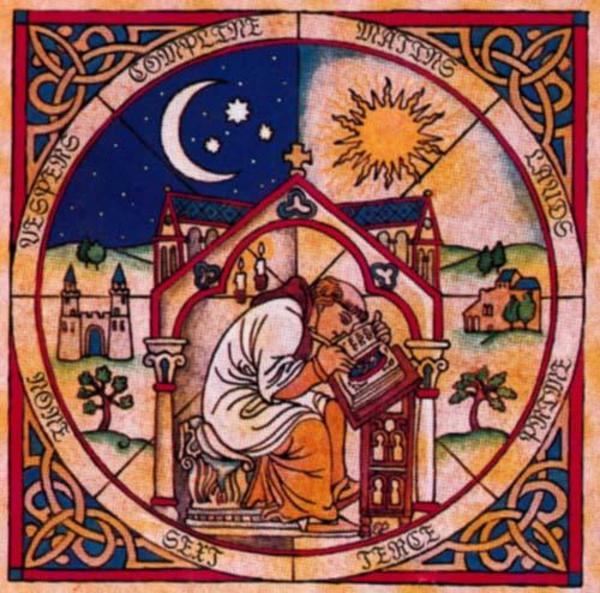
Saturday, July 13, 2013

Stress Level (A Poem)

Sit down there. Have a care. Listen to some tunes. Put in the headphones. Ignore the loons upstairs. No one even cares. It’s not like you can be caught unawares. No one ever stops and stares. Listen to the rhyme. Have a good time. Eat a lime and pucker up. Refuse the offered buttercup. Catch the rude dude on the swing. It’s just mood, dude, what you’re fighting. Eat it up. Information in a cup. Overdrink and spit it out. Give your forehead a good clout. Find a stout stick and stick it out. Sit down there, and pout it out.


Stand up now. Have a cow and rush and row. Realize what you forgot. You’ve let your brain turn into rot. And now you’ve got a lot to do. Panic till you see it through. Be frustrated, down and blue. Be sleepless, helpless. Be self-sufficient. Die a little. Ha! That’s inefficient. Sigh and moan. These wounds of woe. Weep and sigh. Carry on so. They don’t seem to want to leave you, though. Stand up now, it’s time to go.


Kneel and pray. Let Him have say. Practice joy up on your bed. Let it all flow out your head. Weep and groan and sigh and moan. You’re almost grown, you soldier, you. He’ll carry you home if you’re all through. Battle scars and wounds all, too. He’ll help you till you’re finally you. Just let Him, and that’s what He’ll do. Shut up idiot, you know it’s true. Do it now, don’t take all day. Let your guard down all the way. Listen close now, Hear Him say: Kneel and Pray. Stray this way, into day.

Photo by: praycatholic.wordpress.com 

Monday, May 13, 2013

Business as Usual (A Poem)

Saints are different from
Sinners because they
Carry On. 
Saints, however
Carry On because they are a
Sinner. 
Sinners, then, are simply
Saints, that do not
Carry On. 
Sinners, rather, are to
Carry On if they wish to be a
Saint. 
Carry On, then, O you
Saint and
Sinner! 
Carry On, then, O you
Sinner and
Saint!


Readers, I've just finished High School! I don't really know how to feel, how to act, or what to do. Pray for me, then, as I feebly carry on, 
darkness and light, sadness and joy.
The advent of a new age. The end of a celebration.

Friday, May 10, 2013

A Goodbye to My AP Lit Class (A Memoir)


I once had a dream that I was martyred.
            There are only a few things I remember about that dream: the small details. The first thing that comes to mind is how my own brother took a knife and carved three long gashes into my face. I remember screaming for him to martyr me; I remember yelling at him to give me more. I remember that I wanted welts on my back from whips, and gashes on my face from knives before I died. I wanted to be martyred, that was easy to remember.
            But for the life of me, I cannot remember what his faced looked like, what kind of expression he had, holding that knife. I remember the exact feeling of deadness in my limbs: It’s the same feeling I have when I wake up each day. I remember how weak I was. But for the life of me, I cannot remember what my brother’s expression was while I dreamt of martyrdom. It is this that probably disturbs me the most.

One of the many things that I have discovered while studying this art of expression—what we falsely call an English Class—is a rather simple observation. My favorite word in the English language is the word “rather”. I’ve found that I use it constantly in essays, just instinctually. Allow me to provide an illustration: It’s not that I simply like how it sounds, but rather, it’s what the word does that is important. The word “rather” highlights the ability to make distinctions and to recognize detail. The root of the word means “more readily”, “more willingly”, or “more truly”. This small word not only allows us to parse out those small distinctions, to comb out those small details, but enables and furthers the search for truth.

            When I tell people that Wednesday was my last normal day of school, and Monday is my last day… like… forever, they ask me if I’m excited. “OOoo, are you excited?” they say. My first reaction is to yell out “No!...I’m not excited… Rather, it makes me sad to know that not only is this the end of an era, but I have not made the era into what it could have been”. Of course, to avoid strange looks, I lie through my teeth to admit that yes, it is a little exciting. But what I have realized that it is not for the fun of it that I would do this whole thing again (for some parts were distinctly not-fun). Rather, I feel the obligation to learn, to get that sentence just right, to state the truth just as it is, precisely as it is. And I know I have not. I, like Oskar Schell from Extremely Loud and Incredibly Close, find myself surrounded by detail and simply trying to take, keep, and make sense of those that I can.

            Do you know what’s funny? The word “detail” doesn’t mean what we think it means. We think that it means the little things that are set apart from the whole. The root of the word, however, is this: the combination of the prefix de, which means “entirely” with the suffix taillier, which means “to cut in pieces”. This origin of the word creates a meaning that is more along the lines of metaphorical puzzle pieces. Pieces that we weep over when we’ve finally managed to put together two or three out of the pile.

What I have found is this: that the origin and heart of all our bitter-sweetness—especially about endings, like this one—is that we are, and have been, awash in a sea of detail, and we only have the capacity to take in
a mugful or so
each day with our morning coffee.

And although we may always cry out for more, we always find comfort in those we hold in the silence of our minds, though they be at 2 in the morning, found in the sock drawer—all forgotten, or flitting about a rare hum of a woman whom you thought you knew.
The only thing I can say is seek these out, and join me in the great puzzle as we put the shattered beauty of our lives back together.

Sunday, May 5, 2013

Speak Love Softly (A Poem)

Isn't it lovely that you don’t have to be yourself? 

I walk into my parent’s room.
I’m a child.
I've had a bad dream,
And I need to wake up.

That dream is my life, and I feel
Like it’s dead.
I’m a lone corpse
And I need resurrection.

Isn't it lovely that you don’t have to be yourself? 

The room is empty save
For the music box on the shelf.
It plays softly, slowly.

The clutter is overflowing the dresser.
A gun belt, a few knives, many coins
All fall away.
What was sought, No. What was found
Is a crucifix. Christ’s arms are spread wide in the agony of embrace.
I hold him in my hand as the music plays on.

Isn't it lovely that you don’t have to be yourself?

I look into their mirror
And I see my face. But more importantly I see
Eyes that have seen too much evil
A nose upraised at too many a problem
Ears that too often failed to listen
A mouth that was opened too many times in scorn
A head that was not bowed enough.

Isn't it lovely that you don’t have to be yourself?

And the dead weight can be lifted?
And the sin forgiven?
And the corpse given life?
And the fault cut away?
Thrown away?
Eradicated?
Destroyed?
Annihilated?

Crucified..?

Isn't it lovely?
Photo by: www.ag.org

Tuesday, April 16, 2013

The Importance of Goodbyes

Photo by: http://godhearsourprayers.files.wordpress.com

Celebration is a powerful thing.
A thing we celebrate is a thing we keep coming back to, a thing we simply cannot bear to stay away from.

When we celebrate a birthday, the celebration consists not in the cake and not in the presents we give to that person who has just gained a year, but rather the celebration consists of the acknowledgement of the year and its importance to that person. When we celebrate a birthday, we come back to that day when that person was born and rejoice anew for the gift of their life, each year of it. It is a wonder to me that with the celebration of so many things in this life, with so much to come back to, why we are never recollected enough to really appreciate (and therefore celebrate) them properly.


G.K. Chesterton once said in his brilliant introduction to his book The Everlasting Man,
"There are two ways of getting home; and one of them is to stay there. The other is to walk round the whole world till we come back to the same place."
My friends, we are not home. It is plain as day that we are neither in heaven, nor in the right relationship with God (which amounts to heaven). And when we are home, when we are with God, we tend not to stay. The stain of original sin is this: that we, like the prodigal son, so resent our home that we are all to apt to leave. Our attachment to sin or our unwillingness to give ourselves up so drives us that we leave the home that we have in search of something more pleasurable.

Therein lies the power of celebration. We do not say we continue the Mass. We do not say we persevere in the Sacrament of Reconciliation. We Celebrate these precious Sacraments. And why? It is because, in our search for home, we have left it, and have now come back.
The Mass is something that we keep coming back to. God is someone who we keep coming back to through the Sacrament of Reconciliation. In these precious things, we have come back to the Home which we have combed the globe for in our desperate thirst.

I have a nagging hunch that Chesterton was thinking of the prodigal son when he wrote that introduction, for in the end, both sons are home, undoubtedly, solidly home, yet one merits the fatted calf where the other never received one. And it is not, I think, very fair. For even though the older one worked for all his life, the younger one is lauded for coming back from a life of sin, a life of squandered inheritance, familial insult, and debauchery.
Yet is this what humanity is. We cannot pretend to think that when God created Man He did not know what depths we were going to fall to, just as we cannot pretend that the Father did not see what the prodigal son was going to do with the inheritance. Rather, we see that God, being omniscient, obviously knew what humanity would descend to in the Fall of Man. And if this is so, we must also see that God did not only know this, but planned for it. He not only has granted us the free will to run away from Home in the first place, but has fattened the calf and stood lookout for our return.

We were made for Celebration. For in saying goodbye, God has left the gate open for our humble return, our coming home. For it is necessary for us humans to circumnavigate the globe in order to realize that our Home was right where we had started. It is necessary for us humans to say goodbye before we receive our true welcome, to be lost before we can be found.

Sunday, April 7, 2013

Joy is Impenetrable

The difference between a Christian and a non-Christian, it seems, is not whether or not we acknowledge that Christ lived and died, not in whether or not we ever stand at His tomb. The way I see it, our life consists of the moment between when Christ gains life anew, and when the stone is rolled away. We, as humanity, wait at this tomb during our short lives, whether as faithful disciples, or as soldiers who simply got the short straw. Our lives are centered on that quiet moment before the dawn, that lull before the storm, whether we realize it or not.

No, the difference between a Christian and a non-Christian is Attitude.

Pope Francis, in his homily on Palm Sunday, stated it thus:
Do not be men and women of sadness: a Christian can never be sad! Never give way to discouragement! Ours is not a joy that comes from having many possessions, but it comes from having encountered a Person, Jesus, who is among us. It comes from knowing that with him we are never alone, even at difficult moments, even when our life’s journey comes up against problems and obstacles that seem insurmountable, and there are so many of them!
As a Christian, our wait at the tomb is characterized by joyful expectation of a new life, by the recognition that it is Christ Jesus that is behind that stone, and furthermore, that he is very much alive! A Christian recognizes Christ alive in the form of bread at Mass. A Christian recognizes Christ alive in the tomb of every heart that receives Him. That is a Christian attitude: that we wait at the tomb, but in the joyful expectation that this tomb will soon be found empty of death, that our deaths will soon be conquered and our lives will be restored by a risen Christ.

A Christian, then, is characterized by joy. The difference between a Christian and a non-Christian is Joy. We, as Christians, must always remember what our Pope has said, that "A Christian can never be sad!"

However, this is not to say that a Christian must always be necessarily happy. We Christians tend to be a rather somber bunch sometimes. After all, what is Lent? We fast and pray with a solemness that verges on sadness, but is not. No, a Christian is never necessarily happy. Rather, a Christian is joyful, and that is entirely different. Joy, readers, is simply the knowledge that one is loved. And knowledge is justified, true, belief.

Christians are joyful: We believe that God loves us, and we know this to be true because we have seen Christ's death, and this love has been justified in this death, realized in Christ's death. How many times have we heard, after all, John 3:16?
For God so loved the world, that He gave his only Son...
It is not happiness that drives us on, as Christians. Ours is a war of light and dark, of sadness and joy. It is the knowledge that we are loved, the knowledge that God loves us enough that drives us on. The Christian ideal is that joy, this knowledge that we are loved, would drive all our actions, that it would realize Jesus' command:
A new command I give you: Love one another. As I have loved you, so you must love one another.
This Joy, readers, is impenetrable. For we have won the war, this we know. We are now simply waiting for the enemy to surrender. This is our joy. And if we were to hold this joy in our hearts and minds every second of every day, we would be Saints.
Let us try.
Photo by: http://blog.sion.hr/assets/images/401_h.jpg


Happy Feast of the Divine Mercy!

Sunday, March 31, 2013

My Rose (A Memoir)


Abba…Abba, Father. You are the potter. We are the clay.

            I started with an ugly lump of clay, devoid of shape or form. It was a slimy, disgusting thing to hold, yet bursting with potential. So when it was gently placed in my hand that afternoon in March, I could not help but wonder what I was going to make. It was my first time being a potter, after all.
            “I want you to make something with this clay. I want you to make a gift to God. This is what this is: this is your life. Allow God to shape it.”
            Everybody makes a pot, or barrel, or something. This is the Confirmation Retreat, Confirmation class of 2011: it is filled with people who don’t want to be there, and furthermore, who don’t know what to make of this whole clay activity. The retreat had been interesting, to be polite, thus far. To be honest, most of it has blurred in my mind. I remember a recorded testimonial from an old lady who had survived World War II, which I found quite interesting, if a bit long. The tape put most of the others to sleep. I remember going to Confession and bawling my eyes out, and then trying to hide the tears. I remember singing the Divine Mercy Chaplet with all of my heart, even though I characteristically don’t sing. Everybody makes a pot, or barrel, or something. I was intent on making something meaningful.
            And I had no ideas.
            I resigned myself to making a barrel. It was what everyone else was making, and I was fine with that. But I wanted deeply to make something that meant something, to make something that spoke to me. I knew that this barrel symbolized something along the lines of my being open to God’s will, or God filling me up, or some cheesy thing like that. I knew that it was cheesy. I knew that it was a cop-out, that it was a poor substitute for what was supposed to be a prayer. But I resigned myself to it, and started. What else could I do?
            I was folding the edges in to make a barrel shape, when I saw a shape in the clay, or the possibility of a shape. Perhaps I have an artist’s eye, but as I never have been able to duplicate the feat, I find this proposition unlikely. Perhaps it was something more that showed me this possibility. I am convinced that it God who showed me this possibility for my poor clay, my life.
            I made a Rose.
And it brought my soul to its knees with awe. How could I have fully understood that I was crafting the petals of my life? My life. My identity. It was imperfect, but it was beautiful. The rose was absolutely beautiful. I had never made anything so beautiful before. It was the first really beautiful thing I had made in my life.
That Rose shattered my world. It broke it into little tiny pieces, and formed those pieces into its petals. I cannot say how; I am at a loss. All I can say is that before that retreat, my life was different than it is now. Before, I was doing fine, but I was missing something. I lacked conviction, purpose. Sure, in my life, I had packed a parachute. I had a good job all planned for. I had it all figured out. Then to see this, what God wanted me to do, what God wanted me to be: A Rose, not a barrel; A living thing, not a dead one; A beautiful thing, not merely a useful one; A Saint, not merely a man.
That is my purpose: that He help my take each petal, each piece of my life, and shape it, refine it into a Rose, something worth keeping. It is my job, now, to forge my life with His fire, to grow and live and love. To shape my life in the same beautiful, unique, and special way: His way.

Reach Me a Rose (A Poem)

Reach me a rose
With the formless grace
Of olfactory sunlight

Reach me a rose
Heaped with blooms
Spread like wings
In this valley of ashes

Reach me a rose
Filled with faces dead and
Gone Filled with friends
Gone now and forever

Reach me a rose
Explained by the ferocious
Delicacy and single-mindedness
Of the man I want to be.

~D.L. Piscoya

This Blog as a Celebration


Photo by: www.catholicmemes.com 
Tonight was the celebration of (basically) the Mass of all Masses: the Easter Vigil. As I was serving at Mass, in between the complications of Altar Serving at such a great and long occasion, I realized how much I love Easter Vigil. Even with off-key chanting by deacons, awkward improvisations, crowded Altars full of catechumens, finding thrown away baptismal candles, or my own distracted mind, the Vigil was so amazing that it's joy cannot be compared, in my mind, with any other celebration in the Church.
For me, the Mass every Sunday will remind me of the Vigil, not the other way around. That is its heart: that, every Sunday, we celebrate the day between Christ's sorrowful death and his joyful resurrection in an hour.

Our communion with Christ, during the Mass and during our whole life, is not primarily, I think, one of union with Him on the cross, nor is it union with Him on his resurrection day, but rather it is a communion of waiting, of patient, somber, accompaniment. St. Paul said in one of the (many) readings today that:
"We were indeed buried with him through baptism into death, so that, just as Christ was raised from the dead by the glory of the Father, we too might live in newness of life."
~Romans 6:4
If we were born again into Christ's death through our Baptism, and if we live "in the hope of the Resurrection" after death, then our whole life consists of our adoration of Christ entombed. Christ, through the Eucharist, is entombed in our hearts; just as he is hidden -yet alive- behind stone, so is he hidden -yet alive- behind the forms of bread and wine. 
And this is simply something, celebrated most centrally on Holy Saturday, that we keep coming back to every Sunday of the Year.


This blog of mine, yet new, is, for me, a channel for the graces that God has showered upon me, the philosophical beauties that are sometimes realized, or the poetic thoughts given to me by beauty, or the hardness of war that is begotten by the absence of beauty. It is something, like Holy Saturday, that I keep coming back to.
That, dear reader, is the meaning of celebration. Celebration, in its root form, is originally from the Mass, is from the Latin celebratus meaning "much-frequented; kept solemn" (courtesy of www.etymonline.com).
Through this blog, I intend to elaborate that which I much-frequent, that solemnity which I keep coming back to, which I find that I cannot live without.

Easter is here, my friends, Easter is here.

"At nightfall, weeping enters in, but with the dawn comes rejoicing"
~Psalm 30: 6

Monday, March 25, 2013

An Introduction

I am D. L. Piscoya, I now establish this blog dedicated to War and Roses, to the proposition of conflict with evil, especially that which is within me, and the devotion to the great Beauty of God and His Church here on earth, the Holy Catholic Church. I establish this blog, not as a means of evangelization or apologetics, but as a means of exposition, of an outlet through which I may express the Beauty and intensity of which consists of the better part of my life.
Realizing my own failures both as a person and as a writer, I do not expect that most of that which is written here will be worth reading, but, realizing the Beauty, I cannot remain silent. This is that which lends to life meaning, that through which all literature, indeed, all human experience is explained. And I cannot but show this to you.

I dedicate this Blog to both our Blessed Mother, to whom I have devoted myself, and to St. Therese of the Child Jesus, who has done me many favors and given me many Roses. I pray that they may guide my hand in writing, and allow me to adequately express the Beauty and intensity of Love I have found in Christ's Bride.

This is a blog dedicated to the Church with all her Iron, and to God with all His Beauty.

Thursday, December 20, 2012

Starlight (A Memoir)

Photo by: soundzgreg.blogspot.com

I remember the dark street, lit by the orange glow of streetlights. The snow squeaks and groans under my feet. With my hands thrust into my inadequate pockets, I look down, because looking up makes me cold. I am alone, too tired to hurry, too cold to stop.

            I remember, tiredly daydreaming here on my bed. Sometimes I get up and stretch, bent, bowed over my pillow, eyes covered by my hands. There are times when I could cry. My body is weary, my mind even more so. My every move is marked with it, drawn out with my want of rest. It is a deep, bone-drained weariness that grips my soul as I sit here, head leaned back against the wall. I tell myself that I cannot go on much longer.
            I work on sporadically, I suppose, listening to the same stale music, staring at a blank page. How I would love to give in to the mindless amusement of Facebook, or Youtube. My smiles would be tired ones, but they would be smiles. But then the weight of my work would descend even harder than before, crashing through my mind, dulling it.
Writer’s block.
I do it anyway.

            Walking, I dare to look up. The cold, infinite blackness of space looks back. I sometimes feel the sucking of space as it steals the warmth from my body. Our pitiful attempts, our stampings and our wrappings, to stay warm are met with ultimate entropy, the cold, dark emptiness that surrounds us. I sometimes wonder that I don’t get sucked out into space with along with the heat, dispersed into nothingness.

            The music on my laptop plays on, filling my mind with something that it can hold onto. It runs and reruns in my mind thoughtlessly, wearily. I don’t know why I listen to music while working. My thoughts are pushed away by lyrics, fading out into lost memory. Coherence is almost impossible to maintain. But I am so tired, so bone-dead. I need something to keep me alive.

            I see the stars. One by one, they come back to me.
            “Look, there’s the Big Dipper” I say to myself, thoughts connecting in a linear fashion. “And there’s the North Star, because the two last stars that make the Dipper’s dipper point towards it”. Perhaps I turn around and say to myself “There’s Orion, and there’s Taurus, because the three stars of Orion’s belt point towards Taurus’ eye. Wow, look how bright Taurus’ eye is. And there are the Pleiades on his back.” Taurus simply leers at me with his bright eye. I realize I don’t like him, and that I am cold. I look back down, and wonder why I don’t feel comforted.

            There is no comfort for me in my bed. There is simply the realization that it’s 11 PM already, and I need to sleep, and there is the apprehension of another dark morning at 6:30 AM. Sleep is a comfort to me, but it is one that is so little used, so little profitable. It offers the opportunity to fade into nothingness, into warmth, glorious warmth; glorious oblivion. But then I am brought back to the reality of the black sky in the morning, the cold, the weariness. Another morning and no sight of dawn. Another cold stamping and wrapping.


There is no star that shines on me, with a tail like a kite.
There is no star both warm and bright.
Not a star in sight.
No warmth. No light.


Twisting and turning, I search for that star, growing colder, hands out of my pockets. Is it anywhere to be found? Where are you?
Light pollution.
Here on my bed, I am splayed. I lean against the wall, head weakly turned towards my crucifix, bleeding out my last Hail Marys while I drift off. I will fall asleep after the first decade or so. The Rosary will fall from my hand, my prayers will end, my eyes will shut, my body fall.


Tomorrow I will wake again. Tomorrow, I will find my precious Rosary underneath my chest where I had fallen the night before. I will pick it up again, loth to be parted from it. Weariness will set in, again. Tomorrow, I will again venture into the cold to search the stars. Tomorrow, I will look for the star with the tail like a kite. Tomorrow, I will look for the light; Tomorrow, I will strive to keep the warmth. Again.
For I cannot help but hope for that star, the heralding of dawn.