Showing posts with label The Spiritual Life. Show all posts

Saturday, March 8, 2014

The Office (A Poem)


I am a book
A weapon
A yoke

You know this
You must!
You set my ribbons in place
Firmly, grasping at the words within
Gasping at the “Glory Be”
Slipping into slumber

As the world turns
I sit on my shelf
My pages unturned,
Containing within myself
Liturgy! The Word of God spoken! A life worth living

Oh but why do you ignore me?
Adore all else until the last light
Forces you awake
Asleep in my pages
You lie.

I see frustration burrowing within you
Pages drifting out of your spine as you
Forget.
Who you are?
What you’ve done?

Then all you can do is heave
Your rot-less husk of a hardback
Into your shelf and open
Me. I. Your friend and your mentor.
Your closest ally and your starkest reality.
It is I, bound in this menial leather,
That is freest.

And you will again fall asleep,
Many hours forgotten,
Unwritten.
Unspoken.

Not so much prayed as endured. Not so much spoken as sighed.

Monday, February 3, 2014

Candlemas (A Poem)

The crowd comes to gather the darkness.
No light to their wicks has yet sprung.
The church doors allow them no entry.
The night is no longer so young.

Face spreads to face a grey pallor.
No mouth to an ear spreads a lie.
Years upon years mark the aged.
In darkness, they ready to die.

Yet hark! Now a spark among tinder!
Yet see! Now a flame doth arise!
Its light, now a color ‘midst pallor!
Its warmth, now a shine in their eyes!

Now candles light, one to another!
The flaming bright, miming the sun!
Face looks to face, sees a brother!
Hope, with the fire, has won!

For Christ has now entered the temple,
And the Holy of Holies revealed!
The veil is now torn for the priesthood,
The crowd opens doors to be healed!

Glory to God in the highest,
For the people have longed to be free!
Glory to Father, Son, Spirit,
One God and one Lord, Trinity.

Ron Dicianni: "Simeon's Moment"

Friday, January 31, 2014

Philosophy According to Boot Laces


     On a normal day, I have gotten into the truly odd habit of wearing a pair of tough little work boots that I brought back from Christmas break with me. These suede ruffians that I attach to my feet, while being resistant to the rain, ice, or snow that we here in Juneau to intermittently experience, have an uncommon and ignominious curse bestowed on them by the footwear gods: the curse of boot laces.

     Every morning, in order to function correctly during the day, I have set before me a grim and time-consuming task: lacing up my boots good and tight. It is my burden to make sure that each lace that threads through the 7 pairs of lace-holes on each boot is tightened to a sufficient strength. This task is made all the more complex due to the fact that my laces stretch and drag in and out of the holes in a most un-smooth and thoroughly dissatisfying way. This means that I must tug voraciously at the laces for each hole to get them satisfactorily snug. It is only after this that I can tie the knot well, which is another set of complains completely. Let us just say that my knot-tying skills have diminished since I learned back in Kindergarten.

     As a consequence of this drudgery in the morning, it falls to me every evening the task of then undoing all of my morning’s work in order to take the boots off. This morning tightening logically makes it impossible for my foot to even contemplate freedom from the boot without substantially loosening the laces. This I particularly despise, as my former habit of tying my shoes only once, and then slipping them on and off had become muscle memory, now only to be frustrated by a constrictor of a boot. This tightening up and loosening out of my boot laces would drive me up the wall and force me to give up my boots forever if it were not for one virtue that the process entails.

     In this morning and evening ritual of precise tugging, I have learned that boot laces require intentionality. I have to be completely sure that I am going out the door before I actually do it. These boot laces make me think about what it is that I am doing, and answer to why I am doing it. As I step out of my dorm room, I have to know where I am going and why I am going there. If I did not know these things, I would never have laced up my boots. Likewise, I must also know when I am home to stay, and unlacing my boots solidifies this. If I did not go through the process of taking off my boots at the end of the day, would I feel at home at all? No, I would not, and I would not value being at home, either. The patience required by such antiquated means of foot-security makes me have to know and value where I am and where I am going.

     My friends, we live in a generation cursed by the craving for accessibility. We don’t just want to go somewhere, we want to be somewhere, and be there quick. I mean, how many of us would jump at the chance to have a portal gun, or a flying cap, or even just a plain old car? To have things like this would mean that we could go anywhere, anytime, in just minutes. But would we ever appreciate it being there?

     I’m not saying we should all wear suede work boots (well…maybe I am), I’m just saying that a little inconvenience makes for a lot of appreciation. I’m just saying that when you tie your shoes, when you make the walk from housing down to campus, when you make homemade food (hey, I'm a college student, it's a longed-for commodity), when you lock and unlock your door and the beginning and end of the day, you have a greater ability to appreciate what you are doing with your life.

     Happy lacing.

Sunday, October 6, 2013

Miseri Cordis (A Poem)

There is a man who I must be
And yet I do not know his name.
Not yet his body rightly see
Though his cross for mine I claim

Oh the quest through dark night weary
Now my soul must surely claim
For it finds nothing certain clearly
Save uncertainty of name.

And now my wretched heart I know
Holds yet a pain I cannot name
And O this melancholy sow'd
What in reaping will God claim? 

That starkly nameless go I now
Flying fast from flaming claim
Of my soul as is, but how
To crack at the ice and name

The Godhead I so endow
As with life of me, my name
And so freely give up, now,
The free will that I had claimed.

O God, this wretched heart of mine
Is now a mercy that I claim
For though mercy's fogged in time
Heaven's splendor lights my name.

Thursday, October 3, 2013

Evangelism: Gunfights and Boxing

My college happens to have a Baptist Campus Ministry. And while I am not Baptist, it is technically for all denominations of Christians, and since my roommates are Christian as well, and they invited me, I decided to go. 


It was alright for the first hour. There was praise and worship (of which I am not fond), and then there was a sermon on evangelization.
That's when it got interesting.

What the pastor said amounted to this: always look for opportunities to witness to someone, even if you've never met them before. Make friends with them, cultivate their acquaintance in order to share the Gospel with them. Get their story and ask them if they know Jesus. Then, if they do not, launch into the gospel. See if you can't get them 'saved'.
This may be a bad paraphrase of the man, but it is what I took away from the thing.

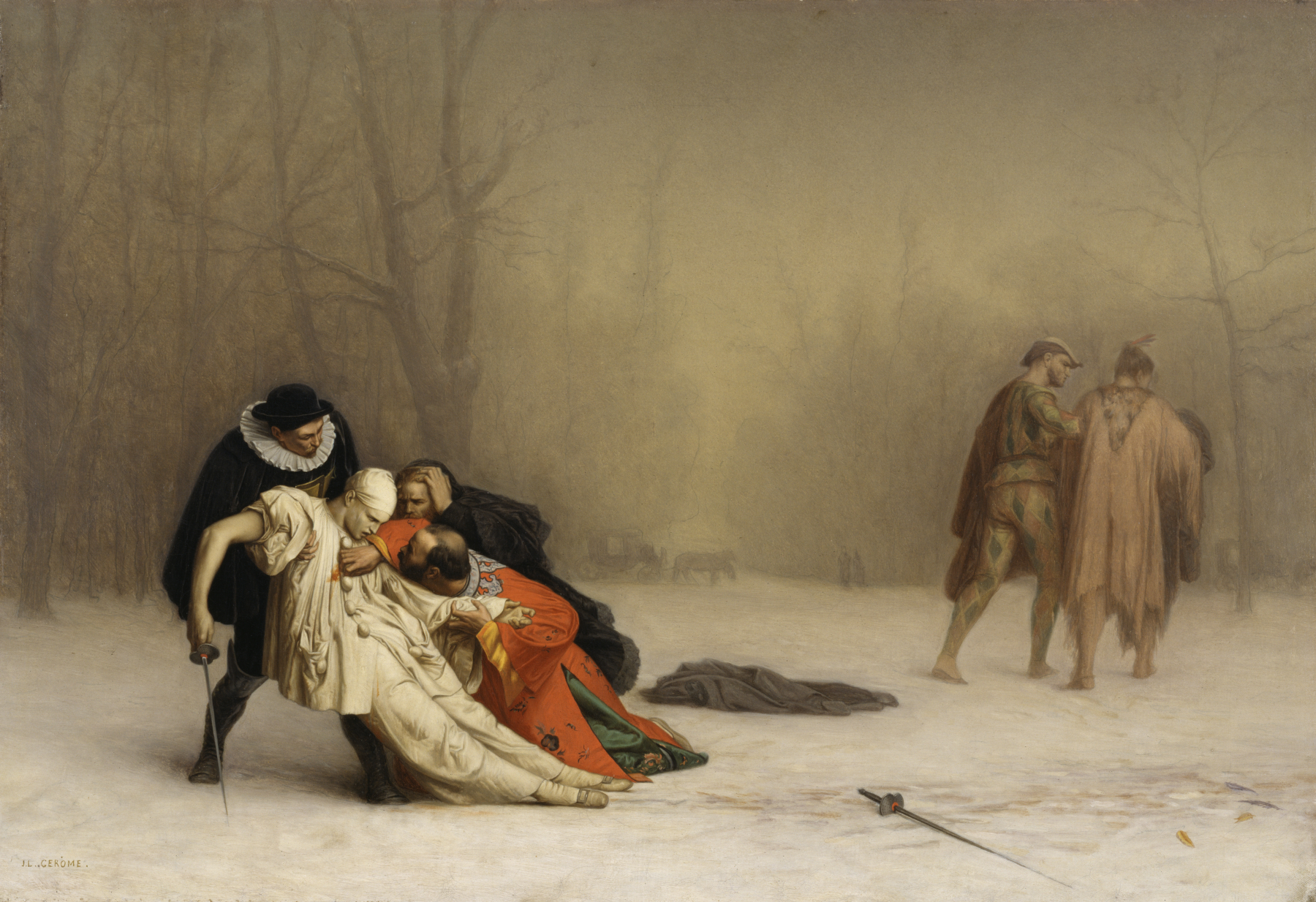
Now, my friends, this does not strike me as the right way of going about the thing. It is making friends, but with an agenda, which is both insincere and self righteous. I would compare it to a duel. Two men meet up somewhere, face off, and fire. It takes three, even two shots, maybe even one for one man to claim victory. In dueling, the two men never really respect each other, they never really become closer to one another. In fact, a duel was often initiated because of a perceived offense to one man or another. 
In this form of evangelization, the Christian initiates conversation because of something he sees is wrong with the other guy. 


Allow me, then, to explain a metaphor of what I think is the right way of going about the thing.

This summer my family went on a fishing trip with a few family friends, and I had to work for the first day, but got to join them for the next days after that because one of our friends had to delay driving down as well. So I got to carpool with him. He is a former boxer from Puerto Rico, and a devout Catholic.
Among the long conversations we had on the way down, I remember this the best: 
He said "Evangelization is like boxing...ya know? You circle the other guy...jab...jab...hook... and you bait him into the knockout."

Now, from what I know about boxing, this makes much more sense than the gunfighter approach. Boxing is characterized by enormous respect, and you really get to know someone by boxing against them. You could take your best friend into the ring, beat him up, and walk out and have a drink with him, or even vice versa- he could beat you up. And it's also the same outcome if the two guys didn't walk into the ring as friends. I mean, take classic boxing movies for example. Rocky's fiercest opponent was Apollo Creed, and they ended up as very good friends because of the respect they earned for each other in the boxing ring.
In boxing, the two guys walk out as friends. In dueling, only one guy walks out.


That is the way it should be: two people spend time becoming friends, circling, if you will. One begins simply referencing the little bits of his faith as it pertains to daily life, like visibly praying before meals, or dressing up for Mass on Sundays. These are the jabs. They lure the other guy in, they inspire and they pique curiosity. Then it is the other man who strikes up the conversation, not the Christian. This initiation is far preferable, too, because often, if the Christian initiates, the other guy will be put off and dismissive of the subject because of the general culture's fears and stigmas about religion. But if the other guy initiates the conversation, he does not enter in with that unwillingness to talk. And I know I would far prefer to talk to someone who actually wanted to have a conversation.
In this form of evangelization, the Christian enters into conversation because of a respect he has for the other man's honor. The Christian may have jabbed first, but he knows that this is simply the way of the game. The game is life, and to jab is natural, else one would not be active in faith. 

Therefore the Christian does not walk into the friendship with a gun and a target, but with a pair of gloves and a willingness to fight. Not picking a fight, but letting a fight pick him. Not as a competition but as a sport. Not death before dishonor, but fighting a good fight.


Sunday, August 25, 2013

Being a Bad Catholic

To a person not deeply immersed in the Catholic-nerd culture, the tagline of my blog must seem very odd.

Dear non Catholic-nerd, Allow me to explain why I, and the rest of the Church Militant, are bad Catholics.

Besides being a less-than subtle nod to Marc Barnes' excellent blog on Patheos called (you guessed it) BadCatholic, this small two-word label is also a reference to another excellent bad Catholic, and a Theological and Philosophical expression at the heart of the Catholic religion and Catholic Theology.

In the famous interview of Walker Percy by himself (Ok, ok...maybe not so famous), Mr. Percy asked himself what kind of Catholic he considered himself to be. He answered himself, "Bad."
Now, I have not read much Walker Percy, but after reading that, I don't feel like I need much more persuading. It's on my to-do list, folks.

What Mr. Percy was hinting at was not simply a quirky remark. His acknowledgement that he is a "bad" Catholic recognizes what I have seen as a central theme in Catholicism, one that I think not many people really get.

Catholicism, in my experience, is at its heart a gradient of perfection. Where man may be imperfect in many ways, he is measured by the perfection of God. St. Thomas in his famous Summa Theologica (ok, ok, probably not so famous to anyone but a philosophy nerd. Cut me a little slack) says this:
"All created perfections are in God. Hence He is spoken of as universally perfect, because He lacks not" ~Summa Question 1, Article 2
 That phrase: "Universally Perfect" used to describe God--and in doing so, describing also the perfect man, which is Christ--, is also what the word "Catholic" really means:
catholic (adj.) 
... from Church Latin catholicus "universal, general," from Greek katholikos, from phrase kath' holou "on the whole, in general," from kata "about" + genitive of holos "whole" (courtesy of www.etymonline.com / my emphasis)
 Where we normally use the term to describe a whole Church, a church of all nations, to describe a person as Catholic is to describe them as "whole" or "universal", which is to actually describe a person as perfect, for perfection is to be whole.
Using that end, that description, there is only one person in this world that can be described as such: Christ. In being perfect, Christ was whole, Christ was Universally human, perfectly human. And in being so, He can be described as Catholic. And of course, this Catholic Church is assembled around Him. The root word for Church comes from Greek as well:
ecclesiastic (adj. 
...from ekkalein "to call out," from ek "out" (see ex-) + kalein "to call" (Also courtesy of www.etymonline.com)
 So, drawing conclusions, the Catholic Church is a universal calling or gathering of people centered upon somebody that is, in themselves, universally perfect.

Now, this perfection that belongs to Christ is, at its heart, infinite. Think back to Pre-Calc in High School. In a graph, an asymtote that is located at 1 will come as close to 1 as the human mind can comprehend, but yet will never reach 1. It will come to 0.9999999999, but it can never be said to be 1.

This gradient that the line creates is kind of like how holiness is. We, as Catholics, strive to become like Christ, to be truly "universally perfect". Now, as humans, we will never be perfect on our own. We mess up, we fall. But just like that asymtote, we will try to reach that number 1.
So Walker Percy said it right when he said we are Bad Catholics. Anything that is imperfect cannot legitimately be called perfect, just as 0.9999999 cannot be called 1. But as we are in the process of being perfected in this Catholic Church, as we are "called out", we enter into the Catholicism of Christ. Just as the asymtote of the line cannot be called 1, it comes so close that we call it 1 anyway.
Well...that metaphor may be a heresy, I'm not sure.

Anyways, we're not perfect like Christ, so we enter into the Church in order to share in his Perfection, to grow nearer and nearer that 1 in order to eventually become it. Thus are we Bad Catholics: not perfect yet!


Pax! Please comment and correct me where I need it!
Making A Mess/ Pilgrimage


            What World Youth Day impressed on me the most is this: that Saints are messy creatures. The Holy Father, in his address to Argentinian youth at the Cathedral of St. Sebastian famously said this: 
“What is it that I expect as a consequence of World Youth Day? I want a mess.”
            Obligingly, we made a mess of Copacabana beach, we made a mess of Rio de Janeiro, and ultimately, we made a mess of ourselves. Pilgrimage does that. (I have been carrying a fierce Brazilian cold for the past three weeks that doesn’t seem to want to leave). Pilgrimages are full of sand, sore feet, and sickness. They are not fun. Now, it is time that I brought the mess home with me.

            That is the nature of a pilgrimage: not only to make a mess, but to do so to reach a destination. We made messes of ourselves getting there and back again. We made messes because the destination was worth it. And World Youth Day, we found, was all the more amazing for the mess.

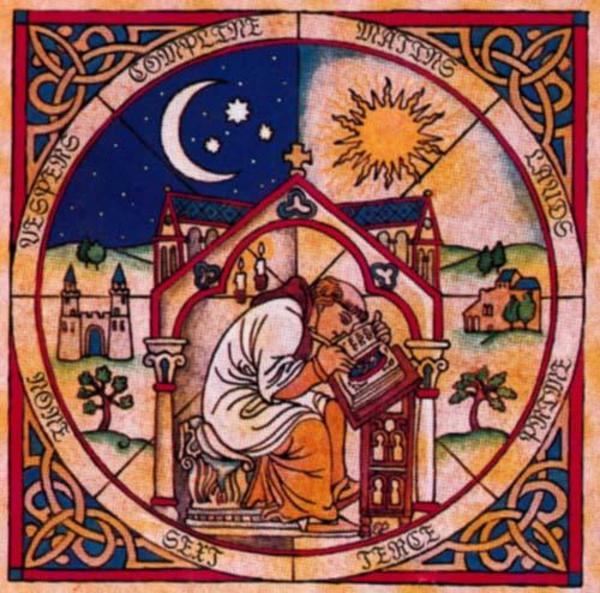
            But returning home, I find that the nature of a pilgrimage may be to reach a destination, but the object of a pilgrimage is to make us realize that life is simply a bigger, broader pilgrimage, one that is directed towards heaven. And what the Pope has been saying this whole time is that we need to strap on our spiritual hiking boots and get mobile. This has meant many things over the past month or so, whether it be actually giving to the poor, or leading the Rosary when no one would, or making an effort to pray the Liturgy of the Hours once in awhile. It means that I will make an effort to dress nice for Mass, make an effort to go to Confession more often, make an effort; to make a mess of myself for the sake of Him who has made a mess of himself for me. 

            It means that we can do something for Jesus that we never thought to do before, to go places we never thought to go, to become someone we never thought we could. Not, indeed, to travel the world, but to travel the field of Faith, to set out, to do something courageous for once... for Him who has done everything for us. Saints are messy creatures because they have hiked very far to reach their destination. They may be caked with spiritual mud and dust, but they have gotten so far, and they have reached Heaven.

            A few weeks ago, I was talking to our local Deacon after mass, and I was saying how disappointed I was that I did not have the privilege of traveling with anyone from our diocese. He turned and looked me in the eye. He said to me “It was your turn”.


            My friends, my turn is over, now it is yours.

Wednesday, August 7, 2013

On Pilgrimage

During the last few weeks, I have had the privilege of attending World Youth Day 2013, in Rio de Janeiro. I had an amazing time! And lately, people have been asking me a lot about it. Many have never heard of World Youth Day. And while I don't blame them in the least, I find it very hard to describe the whole thing?

What is World Youth Day?

I would love to simply show them pictures and be done with it.
World Youth Day is this:
Photo by: http://thecatholicbeat.sacredheartradio.com

And World Youth Day is this:
Photo by: D. L. Piscoya
But the thing is, pictures are worth a thousand words, but not everybody reads them.

First and foremost, World Youth Day is an extraordinary pilgrimage. And a pilgrimage, my friends, is a tricky dame. It is so very easy, for example, to be a pilgrim, but look like a tourist. Both travel the world, and both carry cameras, and both see the beautiful sights. But the more I was on pilgrimage, the more I found myself meditating on what it is to be a pilgrim. What I discovered is this:

To be a pilgrim is to have a destination.
  • Where a tourist says, "Life isn't about the destination, it's about the journey", a pilgrim will always say the opposite. A pilgrimage, such as the famous Camino de Santiago, is more than simply a journey, but a journey to a place, such as The Cathedral of Santiago de Compostela,  and it is not the journey that is important, just that the destination is reached. Whatever that destination is, it is a place that is special, a place where the pilgrim in question can echo the words of St. Peter, "It is good for us to be here". My own pilgrimage destination was Rio de Janeiro, which was made special because of the presence of the Holy Father, and of 3.5 million faithful.

To be a pilgrim is to pray.
  • Not only does a pilgrim have a destination, but a pilgrim has a purpose. Many pilgrims have a certain favor to ask of God or of a special saint. Many simply want to enrich their prayer life. But the unique thing about a pilgrim is that he or she prays. Where a tourist says "ah", the pilgrim says "amen". In my own experience, what is so incredibly special about being on pilgrimage is that, not only do you get to go see the beautiful churches, but you also get to participate in their beauty. For instance, we celebrated Mass at the Shrine of Our Lady of Aparecida in Sao Paulo, Brasil, which happens to rank among the most visited tourist sites in the world. We also had Mass at the Basilica of the Immaculate Conception in Rio, and many other beautiful churches!

Still, with these two definers, the pilgrim seems incomplete. There is nothing too special about going to a certain shrine to pray (of course, there is everything special, but I'll get to that). Why not simply fly in for a day, and fly out? Hence, the third thing that I have found separates a pilgrim from a tourist.

To be a pilgrim is to suffer.
  • One of the many things I did on my pilgrimage to Rio was hurt my feet. I wore Vibrams most days, and we walked about 5 miles every day. We suffered rain, crowds, and really, really bad bathrooms. And we do this because we are pilgrims. Because Pilgrims are not simply on a journey to 'find ourselves' or some stupid new age crap. We suffer, we pray, and we get to our destination because we wish to change ourselves. In the fires of suffering, all the shit that we have stored inside ourselves comes to the top (everybody who suffers gets grumpy, you notice), and when it does that, we are able to wipe off the slag.


The purpose of World Youth Day, and the purpose of any pilgrimage, is not only to change yourself, but by changing yourself, to change the world. Here are the words of the Holy Father:
Your young hearts want to build a better world...But one question remains: Where do we start? Whom do we ask to begin this work? Some people once asked Mother Teresa of Calcutta what needed to change in the Church, and which wall should they start with? They asked her, where is the starting point? And she replied, you and I are the starting point! This woman showed determination! She knew where to start. And today I make her words my own and I say to you: shall we begin? Where? With you and me! Each one of you, once again in silence, ask yourself: if I must begin with myself, where exactly do I start? Each one of you, open his or her heart, so that Jesus may tell you where to start.

For me, and I think for all in attendance at World Youth Day, it started with us, and that pilgrimage.

In the end, it turns out that all our lives are pilgrimages, and each little one we take to some shrine or some Catechetical site simply reminds us of that reality: that we pray and suffer our way to the ultimate destination: heaven. And that pilgrimage is always waiting for us. It starts here.

Saturday, July 13, 2013

Stress Level (A Poem)

Sit down there. Have a care. Listen to some tunes. Put in the headphones. Ignore the loons upstairs. No one even cares. It’s not like you can be caught unawares. No one ever stops and stares. Listen to the rhyme. Have a good time. Eat a lime and pucker up. Refuse the offered buttercup. Catch the rude dude on the swing. It’s just mood, dude, what you’re fighting. Eat it up. Information in a cup. Overdrink and spit it out. Give your forehead a good clout. Find a stout stick and stick it out. Sit down there, and pout it out.


Stand up now. Have a cow and rush and row. Realize what you forgot. You’ve let your brain turn into rot. And now you’ve got a lot to do. Panic till you see it through. Be frustrated, down and blue. Be sleepless, helpless. Be self-sufficient. Die a little. Ha! That’s inefficient. Sigh and moan. These wounds of woe. Weep and sigh. Carry on so. They don’t seem to want to leave you, though. Stand up now, it’s time to go.


Kneel and pray. Let Him have say. Practice joy up on your bed. Let it all flow out your head. Weep and groan and sigh and moan. You’re almost grown, you soldier, you. He’ll carry you home if you’re all through. Battle scars and wounds all, too. He’ll help you till you’re finally you. Just let Him, and that’s what He’ll do. Shut up idiot, you know it’s true. Do it now, don’t take all day. Let your guard down all the way. Listen close now, Hear Him say: Kneel and Pray. Stray this way, into day.

Photo by: praycatholic.wordpress.com 

Friday, June 21, 2013

O Hope (A Poem)

The flowers are dead in the meadow
All that hearkens to God is ignored
All that is Man stands in shadow
And the battle-cry put to the sword

O Hope
For the End

Can renewed be a blade that was broken?
Dust and blood wiped from the eye?
Can ear of man be made to hearken?
And mouth of man, made to cry?
For in every fell deed day is darkened
As the Son of God dims, He will die

O Hope
For the Power

Yes cry the angels in heaven
Yes cry the soldiers below
The helmet indeed has been cloven
Greater indeed is our foe

O Hope
You won't Bend

Still we hope for a dawn yet unbroken
Still we fight for a light that is veiled
Our ears we have made to hearken
The God-man in heaven, we hail
And though we die in this day that is darkened
Our beating heart has not yet failed.


O Hope!
This is our Hour!

Photo by: http://wallpaperus.org


In the works: Two modern heresies and a definition of religion! Pax!


Saturday, June 1, 2013

For When the Beads Fall (A Poem)

There is a Rosary
Of days stretching out
Before us
As if prayed late at night
With fumbling lips
And whispering hands

And you knowing you
Are miles from
The last
Amen

How can we
Endure it
?

And yet you
Say your Hail Marys
As if your heart were a
Candle in the dark
Instead of a crack in the basket
As if
Our Celtic crosses were meant
To intertwine so

     Lovingly.

Onward, then 
I say to you
Saints and Sinners
Into the Dark
Our Rosaries biting in our hands
And slicing in our throats
Like daggers naked
For the devil to behold.

The guardian angels will light the way
When the beads fall from our hands

A sigh dropped from weak humanity
A tear mournfully masquerading as
A Rose 
As the (k)night falls

Photo by: asksistermarymartha.blogspot.com 

An Example

I was sitting here thinking about how leadership doesn't matter to me. I was sitting here thinking about the imagery of the young man carrying the torch, and about how I don’t care. This supposed journey, this giving-of-commands, this head-over-shoulders ability…it finds only bitter contempt in my heart. I was thinking that I’d write a cop-out about my ‘leadership abilities’, and perjure myself on the stand of life, because I don’t value them. It was then that I realized I do…I must.

In this world, we have a dire need for real leaders. In this world of sinful silence, of hellish hedonism, of casual cynicism, of weakness, we need someone good to imitate. For a leader, I realized, was not made to give commands, he is not better than anyone else, he does not place himself in a position of power. Rather he is placed there by circumstances dire, made better by strife and weakness, and commands only the ceasing of all praise. A leader is the one who cries, if only to himself, “Once more into the breach!”

The question faces me, then. It prompts me, seeking out my weaknesses and revealing them before my eyes. I find that sorrow for my failures wells up in my heart as I am asked “Are you a good leader?” To this, I am forced to answer no. But I try.

Between leading small skiers up a hill, leading humbled youth out of the courtroom, leading the procession down the aisle, leading prayer in a small near-deserted classroom, I find that all I can do is set an example. Leading those children, my skiing technique comes into peak performance, striving, as my body does, to show them how to make it up this hill. I remember youth court, where my speeches given as a youth judge sought to embrace the shaking teen sitting at the defense table, to forgive them, let them go, and encourage them never to do it again. And, while leading prayer is one of the least favorite things that I do as a leader of Christ-Centered Youth, I know I can do it well if I can show them a little bit about how to pray, even if it is just a fragment. I know that I can lead the procession down the aisle at Mass if I can focus on the Crucifix above the Altar.

It might not be a good one, and it might not lead in the exactly right direction, but I can—I must—set an example.

I must promise you that I will use everything I can, all the knowledge in the world, my education, my career, all the strength that I have to set an example for you. If I can do better in the future, if I can encourage you up that hill through the dark, and if I can watch you go happily down the other side, I will know that I have done Okay.


Onward, Christian Soldiers.

Monday, May 13, 2013

Business as Usual (A Poem)

Saints are different from
Sinners because they
Carry On. 
Saints, however
Carry On because they are a
Sinner. 
Sinners, then, are simply
Saints, that do not
Carry On. 
Sinners, rather, are to
Carry On if they wish to be a
Saint. 
Carry On, then, O you
Saint and
Sinner! 
Carry On, then, O you
Sinner and
Saint!


Readers, I've just finished High School! I don't really know how to feel, how to act, or what to do. Pray for me, then, as I feebly carry on, 
darkness and light, sadness and joy.
The advent of a new age. The end of a celebration.

Sunday, May 5, 2013

Speak Love Softly (A Poem)

Isn't it lovely that you don’t have to be yourself? 

I walk into my parent’s room.
I’m a child.
I've had a bad dream,
And I need to wake up.

That dream is my life, and I feel
Like it’s dead.
I’m a lone corpse
And I need resurrection.

Isn't it lovely that you don’t have to be yourself? 

The room is empty save
For the music box on the shelf.
It plays softly, slowly.

The clutter is overflowing the dresser.
A gun belt, a few knives, many coins
All fall away.
What was sought, No. What was found
Is a crucifix. Christ’s arms are spread wide in the agony of embrace.
I hold him in my hand as the music plays on.

Isn't it lovely that you don’t have to be yourself?

I look into their mirror
And I see my face. But more importantly I see
Eyes that have seen too much evil
A nose upraised at too many a problem
Ears that too often failed to listen
A mouth that was opened too many times in scorn
A head that was not bowed enough.

Isn't it lovely that you don’t have to be yourself?

And the dead weight can be lifted?
And the sin forgiven?
And the corpse given life?
And the fault cut away?
Thrown away?
Eradicated?
Destroyed?
Annihilated?

Crucified..?

Isn't it lovely?
Photo by: www.ag.org

Thursday, May 2, 2013

This is War

I'll admit, my life is extremely bland. I sit here both watching TV, listening to music, and typing this post. I should be doing my homework: I have a four page paper due on Monday, and I know I won't have much time to do it tomorrow. I'm tired, yet I don't want to go to bed. I know what I must do, yet I consistently find that I lack the willpower to do it.

I spend my free time watching movies about real men, Secondhand Lions, Gran Torino, or The Dark Knight, movies that I love, movies that I try to learn from, movies whose beauty I admire, yet with all of my admiration for the manly virtues shown, I don't act with one damn one of them. I sit and watch movies or mess around on Facebook, and I don't do my homework when I'm supposed to, more obsessed with comfort than duty.

It's the final two weeks of High School for me, and the pressure is on. Coupled with this is a schedule of work every day until Friday this week.

How many times I have fallen asleep praying the Rosary, I will not say.

But that's just the point: I must admit both the need for my work to be done, and my own ability to do it. So, I ask myself, what's stopping me? Weariness? Maybe. Indifference? No, definitely not.
...Fear? Oh Hell yes.
When it comes down to it, I -our Generation as a whole, I think- desperately fear the pain it takes to make the right decision. We fear that in giving all we've got to give, we may be spent. We fear that we may not be enough. We fear, not dying to ourselves, but dying of ourselves. We fear that our adversary may slay us.

To this fear, there is but one reply:
Photo by: http://zimaq.deviantart.com

We may tire, we may slack off, we may whine. But this does not change the fact that This is War.
In this life, in this war between work and weariness, it's kill or be killed. There is no middle option in which we may do nothing. Either our weariness will overcome us and we will slack off, or we will man up, pull ourselves up by the bootstraps, and Get. Things. Done. 
Do I fear the triumph of weariness? Yes, of course. But it is this fear that I may break down that drives me on, because it is only if I triumph over weariness that I will ever escape it. And it will never be easy.


But then again, welcome to the Spiritual Life. Nobody ever said it would be easy...
...just that it would be won.

Tuesday, April 16, 2013

The Importance of Goodbyes

Photo by: http://godhearsourprayers.files.wordpress.com

Celebration is a powerful thing.
A thing we celebrate is a thing we keep coming back to, a thing we simply cannot bear to stay away from.

When we celebrate a birthday, the celebration consists not in the cake and not in the presents we give to that person who has just gained a year, but rather the celebration consists of the acknowledgement of the year and its importance to that person. When we celebrate a birthday, we come back to that day when that person was born and rejoice anew for the gift of their life, each year of it. It is a wonder to me that with the celebration of so many things in this life, with so much to come back to, why we are never recollected enough to really appreciate (and therefore celebrate) them properly.


G.K. Chesterton once said in his brilliant introduction to his book The Everlasting Man,
"There are two ways of getting home; and one of them is to stay there. The other is to walk round the whole world till we come back to the same place."
My friends, we are not home. It is plain as day that we are neither in heaven, nor in the right relationship with God (which amounts to heaven). And when we are home, when we are with God, we tend not to stay. The stain of original sin is this: that we, like the prodigal son, so resent our home that we are all to apt to leave. Our attachment to sin or our unwillingness to give ourselves up so drives us that we leave the home that we have in search of something more pleasurable.

Therein lies the power of celebration. We do not say we continue the Mass. We do not say we persevere in the Sacrament of Reconciliation. We Celebrate these precious Sacraments. And why? It is because, in our search for home, we have left it, and have now come back.
The Mass is something that we keep coming back to. God is someone who we keep coming back to through the Sacrament of Reconciliation. In these precious things, we have come back to the Home which we have combed the globe for in our desperate thirst.

I have a nagging hunch that Chesterton was thinking of the prodigal son when he wrote that introduction, for in the end, both sons are home, undoubtedly, solidly home, yet one merits the fatted calf where the other never received one. And it is not, I think, very fair. For even though the older one worked for all his life, the younger one is lauded for coming back from a life of sin, a life of squandered inheritance, familial insult, and debauchery.
Yet is this what humanity is. We cannot pretend to think that when God created Man He did not know what depths we were going to fall to, just as we cannot pretend that the Father did not see what the prodigal son was going to do with the inheritance. Rather, we see that God, being omniscient, obviously knew what humanity would descend to in the Fall of Man. And if this is so, we must also see that God did not only know this, but planned for it. He not only has granted us the free will to run away from Home in the first place, but has fattened the calf and stood lookout for our return.

We were made for Celebration. For in saying goodbye, God has left the gate open for our humble return, our coming home. For it is necessary for us humans to circumnavigate the globe in order to realize that our Home was right where we had started. It is necessary for us humans to say goodbye before we receive our true welcome, to be lost before we can be found.

Sunday, April 7, 2013

Joy is Impenetrable

The difference between a Christian and a non-Christian, it seems, is not whether or not we acknowledge that Christ lived and died, not in whether or not we ever stand at His tomb. The way I see it, our life consists of the moment between when Christ gains life anew, and when the stone is rolled away. We, as humanity, wait at this tomb during our short lives, whether as faithful disciples, or as soldiers who simply got the short straw. Our lives are centered on that quiet moment before the dawn, that lull before the storm, whether we realize it or not.

No, the difference between a Christian and a non-Christian is Attitude.

Pope Francis, in his homily on Palm Sunday, stated it thus:
Do not be men and women of sadness: a Christian can never be sad! Never give way to discouragement! Ours is not a joy that comes from having many possessions, but it comes from having encountered a Person, Jesus, who is among us. It comes from knowing that with him we are never alone, even at difficult moments, even when our life’s journey comes up against problems and obstacles that seem insurmountable, and there are so many of them!
As a Christian, our wait at the tomb is characterized by joyful expectation of a new life, by the recognition that it is Christ Jesus that is behind that stone, and furthermore, that he is very much alive! A Christian recognizes Christ alive in the form of bread at Mass. A Christian recognizes Christ alive in the tomb of every heart that receives Him. That is a Christian attitude: that we wait at the tomb, but in the joyful expectation that this tomb will soon be found empty of death, that our deaths will soon be conquered and our lives will be restored by a risen Christ.

A Christian, then, is characterized by joy. The difference between a Christian and a non-Christian is Joy. We, as Christians, must always remember what our Pope has said, that "A Christian can never be sad!"

However, this is not to say that a Christian must always be necessarily happy. We Christians tend to be a rather somber bunch sometimes. After all, what is Lent? We fast and pray with a solemness that verges on sadness, but is not. No, a Christian is never necessarily happy. Rather, a Christian is joyful, and that is entirely different. Joy, readers, is simply the knowledge that one is loved. And knowledge is justified, true, belief.

Christians are joyful: We believe that God loves us, and we know this to be true because we have seen Christ's death, and this love has been justified in this death, realized in Christ's death. How many times have we heard, after all, John 3:16?
For God so loved the world, that He gave his only Son...
It is not happiness that drives us on, as Christians. Ours is a war of light and dark, of sadness and joy. It is the knowledge that we are loved, the knowledge that God loves us enough that drives us on. The Christian ideal is that joy, this knowledge that we are loved, would drive all our actions, that it would realize Jesus' command:
A new command I give you: Love one another. As I have loved you, so you must love one another.
This Joy, readers, is impenetrable. For we have won the war, this we know. We are now simply waiting for the enemy to surrender. This is our joy. And if we were to hold this joy in our hearts and minds every second of every day, we would be Saints.
Let us try.
Photo by: http://blog.sion.hr/assets/images/401_h.jpg


Happy Feast of the Divine Mercy!

Sunday, March 31, 2013

Reach Me a Rose (A Poem)

Reach me a rose
With the formless grace
Of olfactory sunlight

Reach me a rose
Heaped with blooms
Spread like wings
In this valley of ashes

Reach me a rose
Filled with faces dead and
Gone Filled with friends
Gone now and forever

Reach me a rose
Explained by the ferocious
Delicacy and single-mindedness
Of the man I want to be.

~D.L. Piscoya